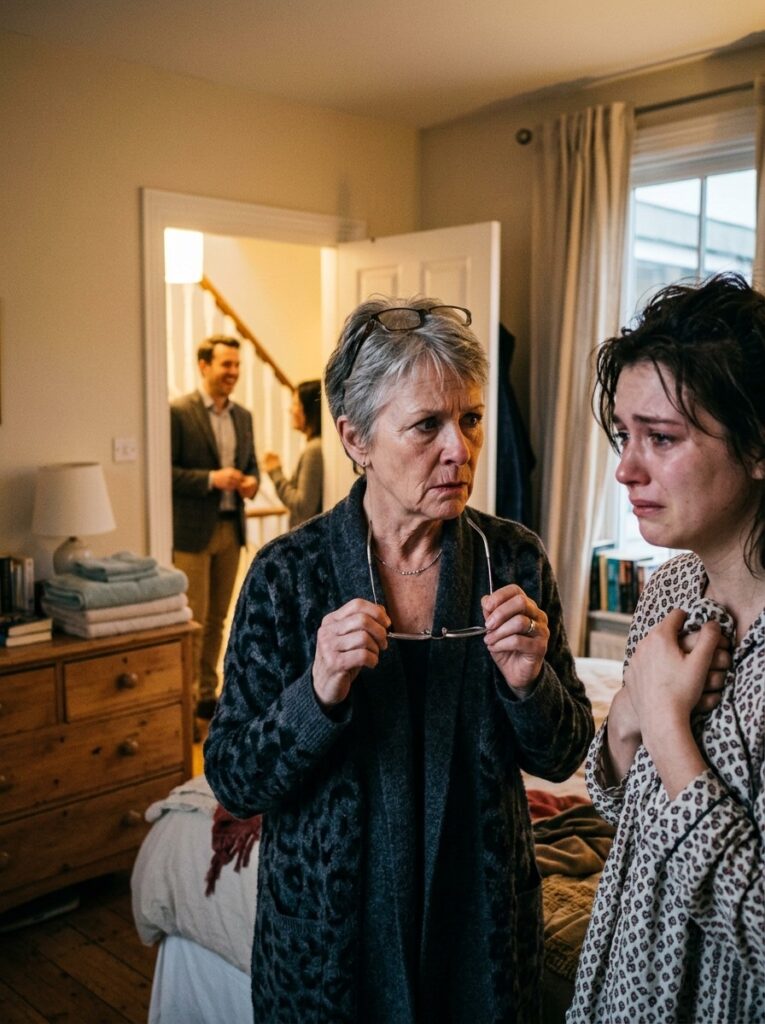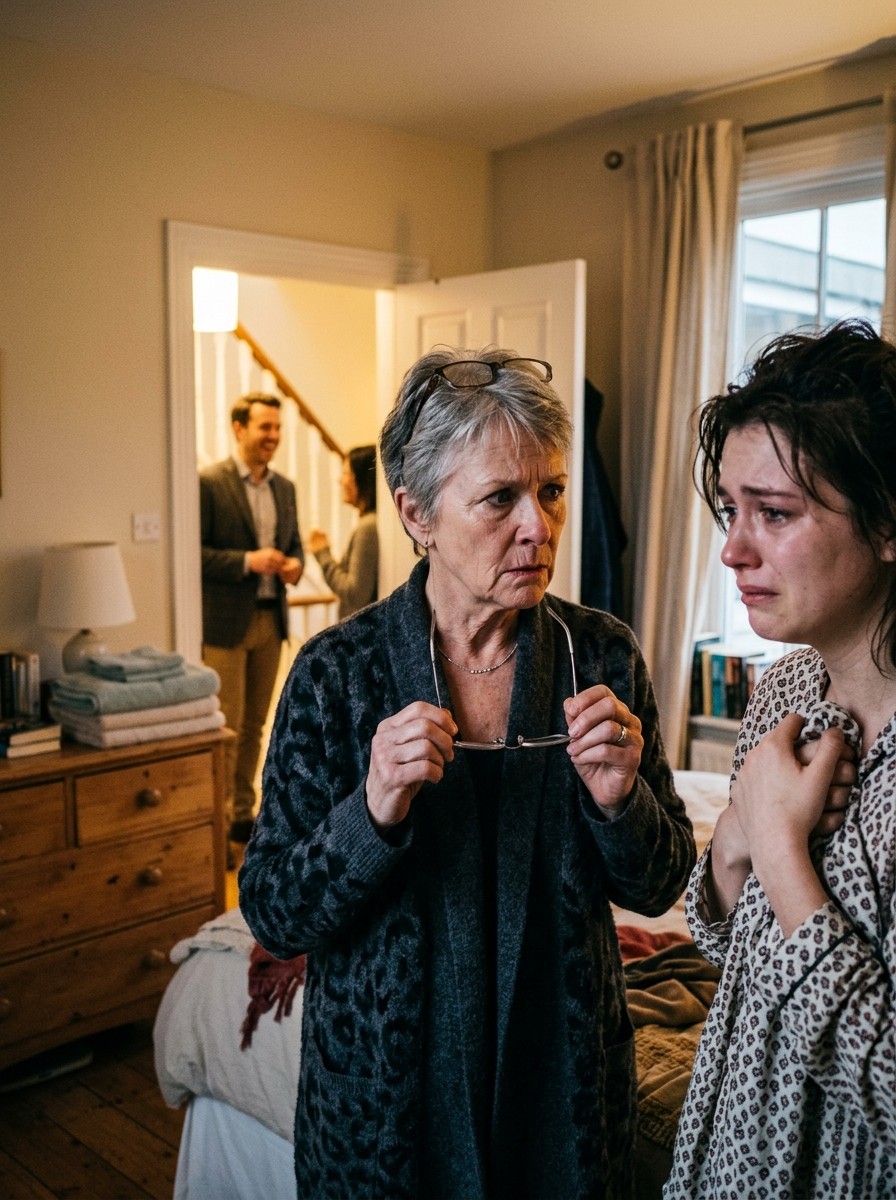
Hannah stared at me like I’d spoken in a language she didn’t recognize.
“Mom, you don’t understand,” she said. “He has connections. People respect him. If I say anything, he’ll make it look like I’m the unstable one. He’s already said that’s exactly what he’d do.”
I stepped closer and took both her hands in mine, gently, the way I used to when she was small and afraid of thunderstorms.
“No, sweetheart,” I said. “He doesn’t understand.”
“Understand what?”
I looked directly into her eyes. “That the woman he threatened happens to be the daughter of someone who spent nearly three decades putting arrogant men exactly like him on the witness stand.”
For the first time all evening, something shifted in her face. Not relief exactly. Not yet. But the smallest flicker of something that might eventually become hope.
Downstairs, Eric sat comfortably in our kitchen, laughing with my husband over coffee and dessert. The perfect son-in-law. Tailored suit. Expensive watch. Easy confident laugh that filled the whole room.
When I walked in, he stood immediately, the way he always did, performing good manners with the polish of a man who had learned exactly which gestures made people trust him.
“Judge Whitfield,” he said warmly. “Always a pleasure.”
I studied him for a long moment. The suit. The watch. The posture that assumed every room he entered already belonged to him.
Then I smiled.
“The pleasure,” I said calmly, “will be all mine.”
He smiled back, completely unaware, because men like Eric never recognize danger until the evidence has already started speaking for itself.
That night, after he and Hannah left for the guest room, I sat at my desk and made a list. Not of accusations. Of facts. Dates. Patterns. The dinner three months ago where Hannah had suddenly developed a headache and gone home early. The wedding anniversary trip she’d cancelled at the last minute, citing exhaustion. The way she’d stopped posting photos of the two of them together sometime around the spring.
I had spent twenty-six years learning to read a pattern of behavior the way other people read a sentence. I started building the case the same night I saw those bruises, because I understood something Eric apparently did not.
Power built on intimidation only works as long as no one with equal or greater resources decides to push back.
It took six weeks to build a case strong enough that Hannah could walk away from that marriage without spending the rest of her life looking over her shoulder.
I didn’t preside over it myself, obviously — that would have been improper, and I wanted nothing about this case to ever be challenged on the basis of impropriety. Instead I connected Hannah with a colleague I trusted completely, a federal prosecutor named Patricia Ruiz who had built her career on exactly this kind of case, men who believed their professional standing made them immune to consequence.
The bruises were photographed and documented by a physician within days. A pattern emerged once Hannah finally felt safe enough to speak honestly — three years of escalating control, isolation from friends, financial restrictions disguised as “shared budgeting,” and physical violence that had started small and grown steadily worse, exactly the way these patterns almost always do.
Eric’s confidence didn’t crack immediately. He hired an excellent defense attorney. He showed up to every hearing in a perfectly tailored suit, composed and reasonable, exactly the version of himself he had spent years performing for everyone outside his own home.
What he hadn’t accounted for was that Hannah was no longer the only voice in the room. A former housekeeper came forward, describing things she’d witnessed and been too afraid to report at the time. A neighbor confirmed hearing arguments through thin apartment walls. Text messages, recovered through forensic analysis, showed a pattern of controlling language stretching back years, the kind of evidence that doesn’t argue itself away no matter how good your lawyer is.
The case never went to a public trial. Eric’s attorney negotiated a plea agreement six weeks before it would have, facing the reality that a jury would have very little sympathy for a defendant whose own carefully documented words painted such a clear picture. He lost his law license. He received a sentence that included both prison time and a permanent restraining order. The marriage was dissolved with full protections in place for Hannah, including provisions that meant she never had to interact with him directly again unless she chose to.
Hannah moved back into our guest house for several months afterward. I watched her slowly relearn how to sit in a room without flinching, how to laugh without checking first whether it was the right moment to laugh, how to simply exist without managing someone else’s mood.
It took time. It is still taking time, honestly, though she has her own apartment now and a job she genuinely loves, and last month she started seeing someone new, slowly, carefully, with the kind of caution that tells me she’s learned to trust her own instincts again before she trusts anyone else’s charm.
I think about that evening with the towels often. How close I came to simply setting them on her dresser and walking back downstairs without ever opening that door fully enough to see what she’d spent months hiding.
Twenty-six years on the federal bench taught me to recognize patterns of power and control from a careful distance. It took my own daughter, silent and terrified in her childhood bedroom, to teach me how much closer to home those patterns can actually live.
Share this for every person who was told nobody would believe them, and for every parent who finally saw what their child had been hiding. ❤️👇
— Update: Hannah came over for dinner last Sunday. She laughed at something her father said, and for the first time in a long time, it reached her eyes completely. I noticed. I always notice now.