Part 3
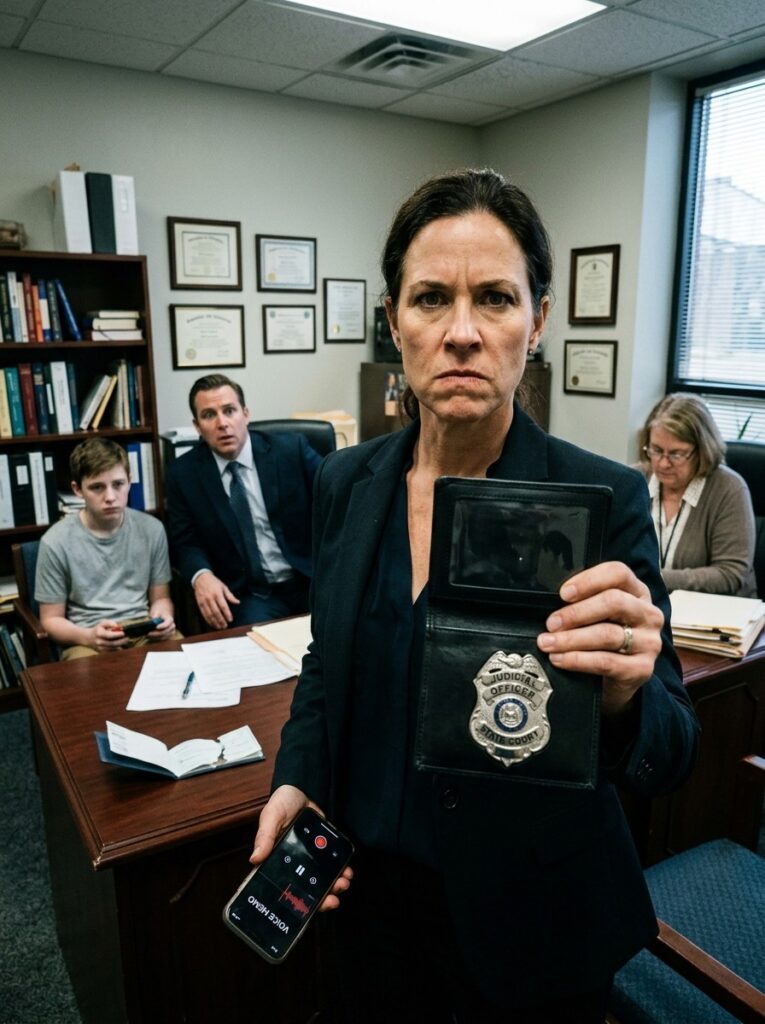
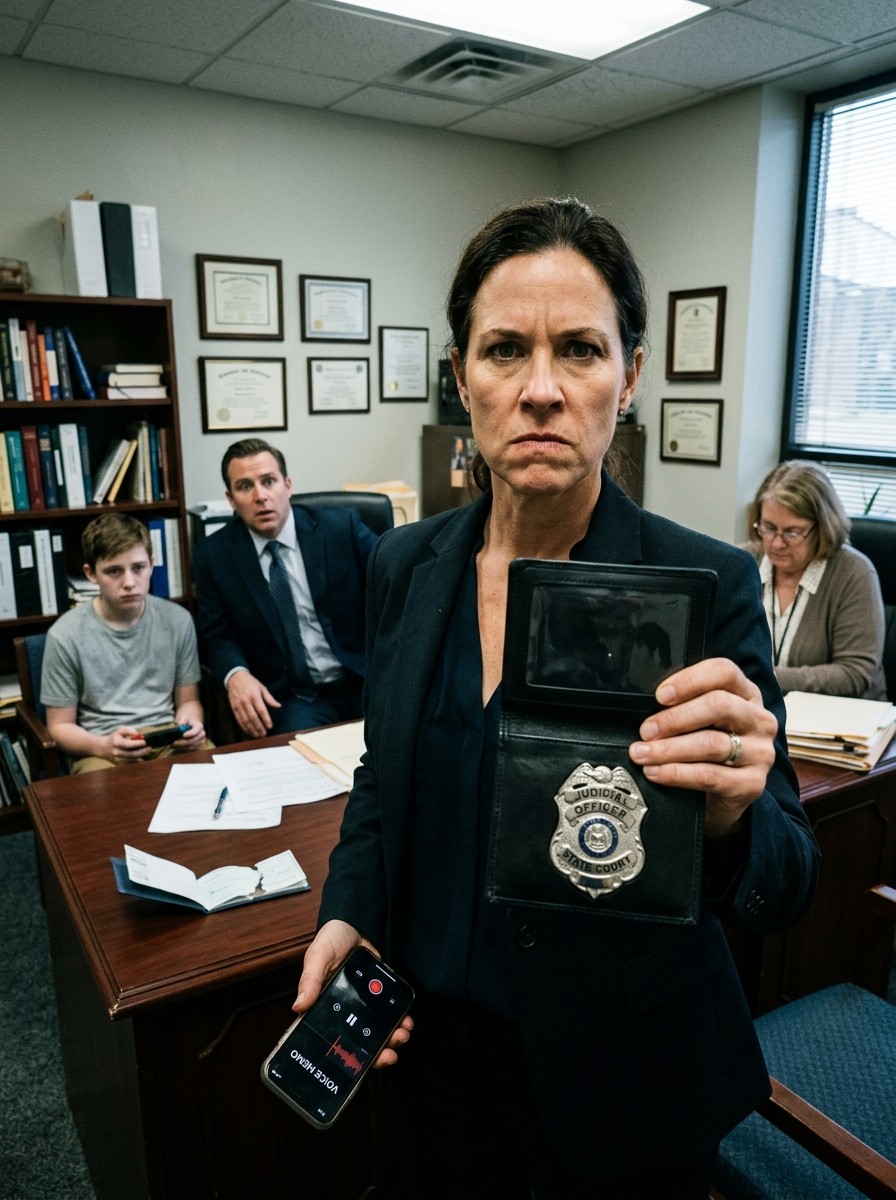
I made one phone call. Not to the local police — Richard was right that he had connections there. I called the District Attorney’s office directly, a woman named Sandra Chen whom I had worked beside for three years and who owed favors to no one. “Sandra,” I said, “I need a unit at Oak Creek Elementary. I have a recorded confession of aggravated assault on a minor, an attempted bribery of a public official, and a school administrator who witnessed the attack and failed to report it.” Silence on the other end for exactly two seconds. Then: “I’m sending someone now.” Richard tried to grab my phone. I stepped back and looked at him the way I look at defendants who think the courtroom belongs to them because their suit costs more than the bailiff’s car. “Touch me,” I said quietly, “and you add battery of a judicial officer to the list.” He froze. For the first time in his life, money couldn’t fix what was happening. His checkbook was still open on the desk — that five-thousand-dollar bribe sitting there like evidence gift-wrapped with a bow. Max had gone completely silent, the video game forgotten, his face cycling between confusion and the dawning realization that his father couldn’t protect him from this. The principal finally spoke. “Judge Castillo, I — I didn’t know who—” “You didn’t need to know who I was,” I said. “You needed to protect a child. Any child. And you chose a donor’s money over a little girl’s safety.” Within fifteen minutes, two investigators from the DA’s office walked through the door. They photographed the check. They secured the voice recording. They took statements from three teachers who had witnessed previous incidents and been told by the principal to stay quiet. And they informed Richard Sterling that his son was being referred to juvenile court — and that Richard himself was under investigation for attempted bribery, obstruction, and contributing to the delinquency of a minor.
Part 4 (The Ending)
Richard hired four attorneys by the following morning. It didn’t matter. The recording was clear. The confession was voluntary. The check sat in an evidence bag with his handwriting on it. And three teachers, finally freed from the silence the principal had enforced, gave detailed statements about eighteen months of bullying that Max had inflicted on multiple students — all of it buried because Richard Sterling’s donations kept the school’s new gymnasium funded. The principal was removed within a week. The school board launched an independent investigation. Max was placed in a court-mandated behavioral program and transferred to a different district. And Richard — the man who told me I was powerless — watched from across a courtroom as the system he believed he had purchased refused to bend for him. He never apologized. I never expected him to. Apologies require the kind of self-awareness that money actively works against. But on the day the ruling came down, he looked at me across the courtroom with an expression I will carry with me for the rest of my life — not anger, not hatred, but the quiet devastation of a man realizing that the woman he had discarded was the most powerful person in the room. I drove straight to the hospital afterward. My daughter was sitting up in bed, her cast covered in stickers her nurses had given her, watching a cartoon about a girl detective who solved mysteries. She looked up at me and asked, “Did you fix it, Mama?” I sat on the edge of her bed and held her good hand. “Yes, baby,” I said. “I fixed it.” She smiled and went back to her cartoon. And I sat there watching her, still in my courtroom clothes, still smelling faintly of disinfectant and justice, and I made one more promise — this one to myself: no child would ever be hurt in that school again. Not while I had a voice. Not while I had a gavel. And not while any man on this earth believed that money was louder than a mother’s love. ❤️🩹
Short Summary: After her eleven-year-old daughter is pushed down a staircase at school and hospitalized with a broken arm and concussion, a single mother rushes to the principal’s office to confront the bully — only to find her arrogant ex-husband sitting in the principal’s chair, shielding his son with money and connections. He mocks her, bribes her, and calls her powerless. What he doesn’t know is that the quiet woman he discarded years ago is now the Chief Judge of the County Superior Court — and his son’s proud confession, his attempted bribery, and the school’s cover-up have all been recorded. The people who thought money made them untouchable chose the wrong child to hurt.
The Lesson
Power isn’t always loud. The woman in this story didn’t scream, didn’t threaten, didn’t match her ex-husband’s arrogance with anger. She asked one calm question, let the guilty answer it proudly, and then made a single phone call. That restraint — the ability to stay composed when every instinct is telling you to explode — is what separated justice from revenge.
The deeper lesson is about what we mistake for strength. Richard believed money was power. His son believed immunity was strength. The principal believed silence was safety. All three were wrong. Real power is the willingness to protect someone who cannot protect themselves, even when the system is designed to look the other way. And sometimes the most dangerous person in the room isn’t the one making the most noise — it’s the quiet one reaching into her handbag.