PART 2: The Name That Wasn’t Theirs
For a moment, the arena didn’t react.
There was applause—polite, automatic, expected.
But in the front row, two people froze.
My mother’s smile faltered first, confusion flickering across her face as she scanned the program again. Her lips parted slightly, as if the name she had just heard didn’t quite register.
My father leaned forward, squinting at the page, tracing the letters again and again like he could force them to rearrange.
Rivera.
Not Parker.
Not theirs.
On stage, I stepped into the light.
I didn’t rush. I didn’t hesitate. Every step was deliberate, measured—earned.
As I reached the podium, I let my eyes sweep across the crowd.
Families stood proudly. Cameras flashed. Tears were wiped away.
And then I found them.
Still sitting. Still confused.
Still trying to understand how the story they had written fifteen years ago had somehow rewritten itself without them.
I adjusted the microphone.
“Good afternoon,” I began, my voice steady, carrying across the arena.
“It’s an honor to stand here today—not just as a graduate, but as someone who was given a second chance at life.”
A pause.
Not for effect.
For truth.
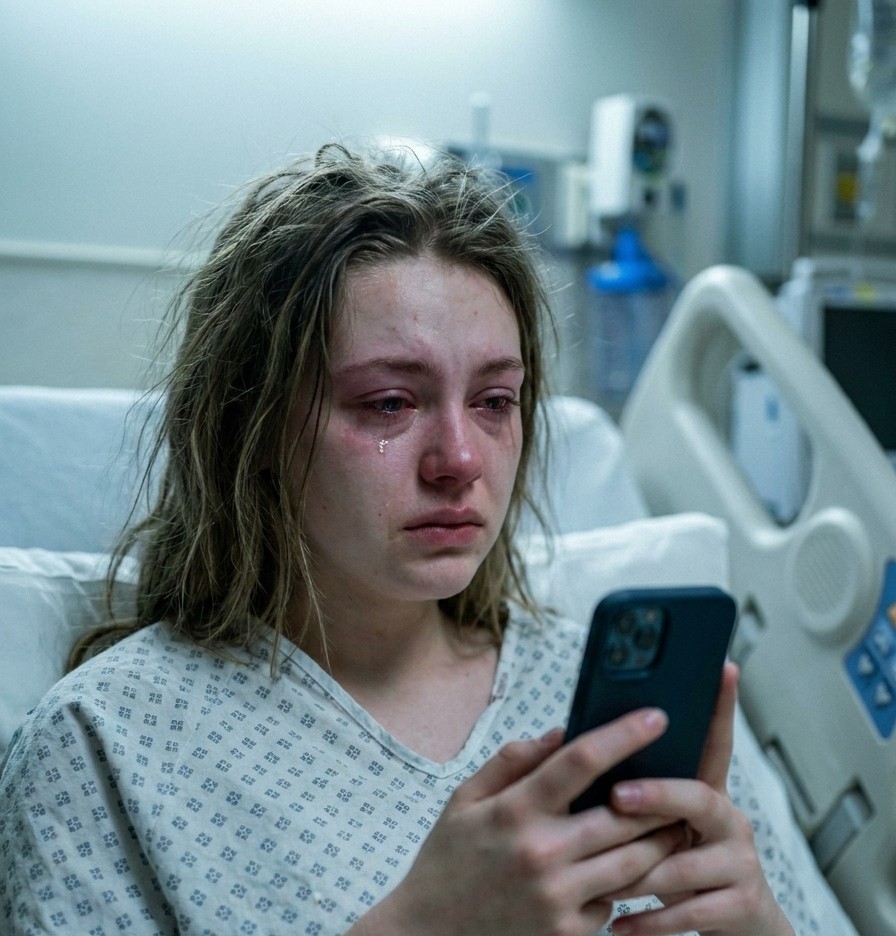
“When I was thirteen years old, I was diagnosed with leukemia.”
The crowd quieted instantly.
“I remember the fear. The uncertainty. The long nights wondering if I would live long enough to see another year.”
I let the silence stretch.
“And I remember the day I learned something even more painful than my diagnosis.”
My gaze didn’t leave the front row.
“That not everyone who brings you into this world is willing to stand beside you in it.”
A ripple moved through the audience.
Small. Subtle.
But undeniable.
My mother’s hand tightened around her purse. My father shifted in his seat.
They knew.
Or at least, they were beginning to.
“But I also learned something else,” I continued, my voice softening.
“That family is not defined by blood. It’s defined by who stays.”
PART 3: The Truth in the Spotlight
I turned slightly, looking toward the section where Megan sat.
She was already crying now, one hand pressed over her mouth, the other clutching those yellow roses like they were the only thing grounding her.
“There was a nurse,” I said. “Who had no obligation to me. No reason to take on the burden of a sick child.”
My voice wavered—not from weakness, but from the weight of memory.
“She stayed after her shifts. She held my hand when I was scared. She reminded me that my life had value… even when others decided it didn’t.”
The arena was completely silent now.
You could feel it—that shift.
That understanding.
“That nurse became my mother.”
A collective breath moved through the crowd.
“And everything I am today—every step that brought me to this stage—exists because she chose me when it would have been easier not to.”
I let that land.
Then, carefully, deliberately, I stepped away from the podium.
“Mom,” I said, my voice carrying clearly. “Will you come up here?”
Megan froze.
Then shook her head instinctively, overwhelmed.
The Dean smiled gently and gestured toward her.
The crowd began to clap—softly at first, then louder, rising as she slowly stood, trembling, and made her way down the aisle.
As she climbed the steps, I met her halfway.
She tried to say something, but no words came out.
So I said it for her.
“You saved my life.”
I turned back to the microphone, taking her hand.
“And today, I want everyone to know whose name I am proud to carry.”
I looked directly at the front row.
At the people who had come expecting recognition.
“Not the ones who walked away.”
A pause.
“But the one who stayed.”
The applause exploded.
Not polite.
Not automatic.
But earned.
PART 4: What They Finally Understood
I didn’t look at them again after that.
I didn’t need to.
Because the truth had already done what fifteen years of silence never could.
It had found them.
After the ceremony, as families gathered and celebrated, I stood surrounded by classmates, professors, and the woman who had given me everything.
Megan kept shaking her head, still in disbelief.
“You didn’t have to do that,” she whispered.
“Yes,” I said gently. “I did.”
Because for the first time in my life, the story wasn’t about what I had lost.
It was about what I had been given.
Across the arena, I caught a glimpse of them.
They hadn’t come over.
They didn’t call my name.
They didn’t try to explain.
For once, they understood something clearly:
They had no place in this moment.
No claim to it.
No ownership of the person I had become.
Because success isn’t something you get to share credit for after walking away from the struggle.
And love—
Real love—
Doesn’t leave.
I turned back to Megan, smiling as she handed me the yellow roses.
“Ready to go home?” she asked softly.
I nodded.
“Yeah,” I said.
And for the first time, that word meant exactly what it was supposed to.
