Every Step Sounded Like a Verdict
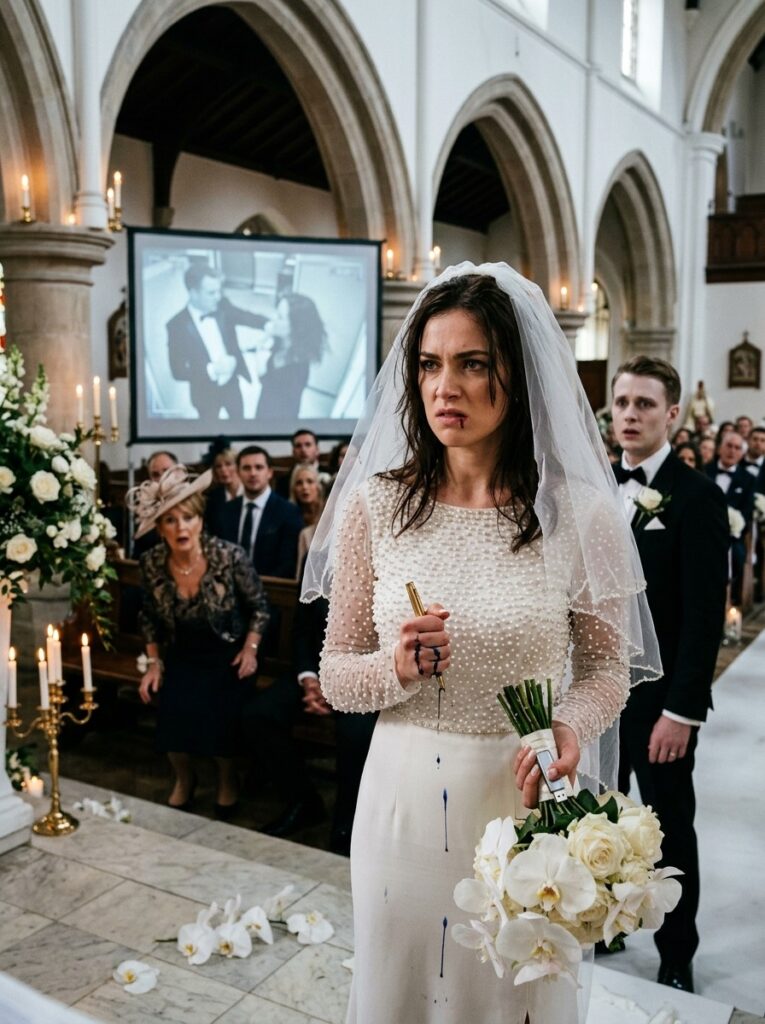
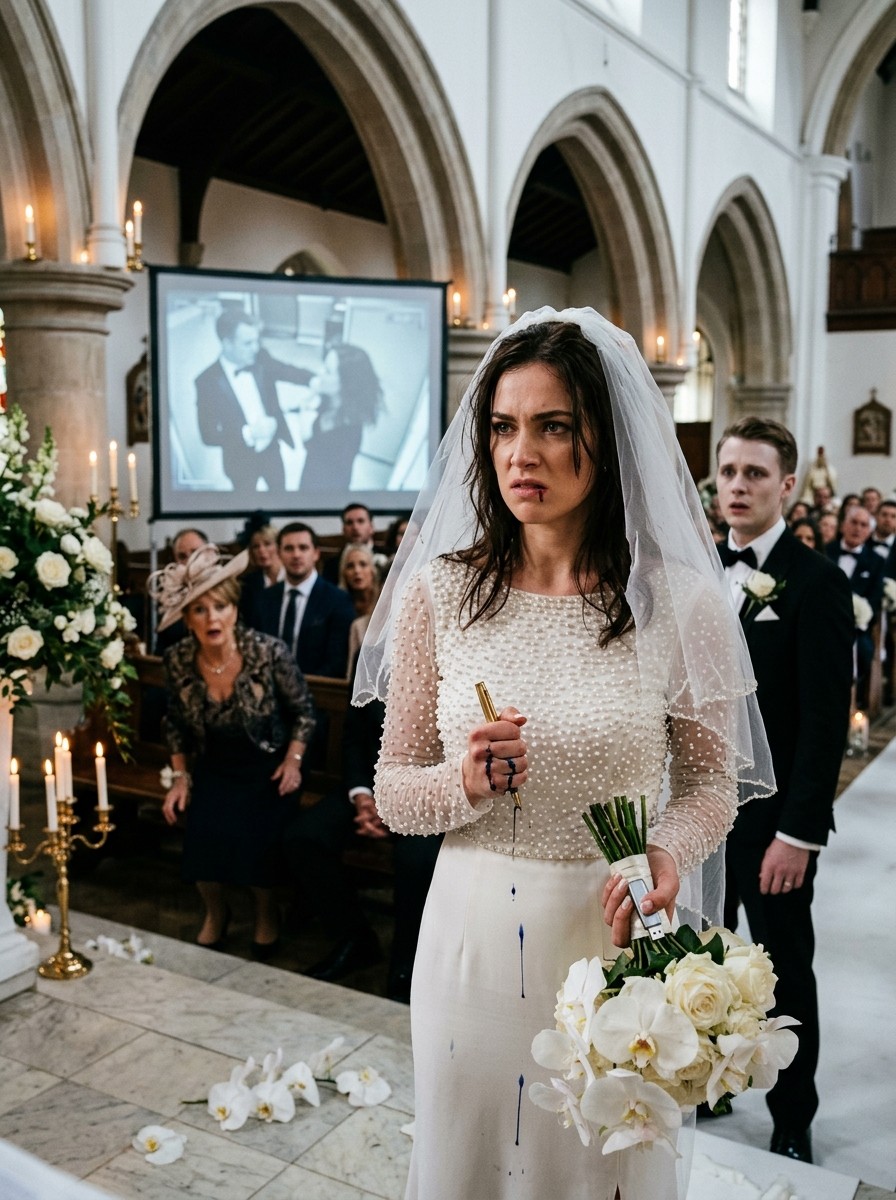
Iwalked down the aisle with a split lip and a torn veil, and every step I took on that white runner sounded like a verdict being delivered. The pearls on my gown trembled as if they already knew what was coming. The church was full — white roses, gold candles, three hundred guests in their finest, all pretending not to stare too hard at the bruise forming beneath my lipstick.
At the altar, Caleb Whitmore waited in his custom black tuxedo, smiling like a king about to receive tribute. His mother, Evelyn, sat in the front pew wearing champagne silk and diamonds bright enough to blind God. As I reached him, Caleb leaned toward his groomsmen and said it loudly enough for half the church to hear: “She needed a reminder of who’s boss before we sign the papers.” The silence cracked. Then came the laughter — not everyone, but enough. His groomsmen chuckled. Evelyn covered her mouth with gloved fingers, eyes glittering. A few cousins looked away. The pastor froze, Bible open in his hands. I did not cry.
Twenty Minutes Earlier
In the bridal suite twenty minutes before the ceremony, Caleb had struck me across the face because I refused to sign the document his mother had brought in at the last second. It wasn’t a prenuptial agreement. It was a surrender — my shares in ValeTech, my late father’s voting rights, my grandmother’s estate, all transferred into a marital trust controlled entirely by Caleb’s family.
“You marry him,” Evelyn had said, sliding the papers across the vanity with manicured fingers, “or the photos leak tonight.” She meant the edited photographs. The fabricated affair. The forged emails. The manufactured scandal designed to destroy my reputation before the emergency board vote scheduled for that very morning. Caleb had smiled and nodded from behind her like a man who believed the game was already won.
They thought I was cornered. They thought grief had made me soft — my father had died six months earlier, leaving me his fifty-million-dollar company and a boardroom full of wolves who smelled blood. Caleb had entered my life at the funeral reception with flowers, sympathy, and timing so perfect it should have been a warning. But my father had taught me one rule before he passed: “When men rush you to sign, Amelia, read what they’re afraid you already know.” So I had read. I had watched. And for five months, I had quietly recorded everything.
The Gold Pen
At the altar, the pastor cleared his throat to begin. Caleb interrupted smoothly, gesturing toward the ornate wooden podium where the official marriage registry waited. But I knew what was hidden beneath its thick pages — the asset transfer documents, slipped directly into the registry book so I would sign them in front of three hundred witnesses without realizing what I was surrendering. I glanced at the massive antique clock on the church wall. Nine fifty-eight. The ValeTech board was waiting downtown to announce the corporate merger at exactly ten o’clock, legally backed by the signature I was about to provide.
“Sign the registry first, sweetheart,” Caleb whispered, pressing an expensive gold fountain pen into my hand. “Let’s make it official before God.” Evelyn leaned forward from the front pew, her eyes locked on the pen like a predator watching prey step into the trap. My nib touched the heavy paper. The ink bled slightly into the grain. Then I stopped.
I looked at Caleb. I offered him one chilling, steady smile. And I snapped the gold pen in half with my bare hands, dropping the leaking, broken pieces onto the marble floor. “I prefer to write my own endings,” I whispered.
What Was Inside the Bouquet
Before he could react, I reached deep into my bridal bouquet, past the white orchids, and pulled out a small silver flash drive. I stepped past a stunned Caleb, walked to the church’s projector system, and plugged it in. “Let’s look at the real reminder,” I announced into the microphone. The massive screen behind the altar lit up, and three hundred guests went dead silent.
The first thing they saw was security footage from the bridal suite — timestamped twenty-three minutes earlier — showing Caleb striking me across the face while his mother stood behind him holding the documents. Evelyn’s champagne silk was unmistakable. Her diamond earrings caught the light. And her voice came through the speakers with devastating clarity: “Sign it, or we destroy you.” The church erupted. Gasps swept through the pews. Caleb lunged for the projector cable, but two of my father’s former security officers — men I had positioned near the altar that morning, disguised as ushers — stepped in and held him back with quiet, professional force.
The screen continued. Five months of recordings played for the congregation — audio of Caleb and Evelyn discussing how to manipulate the board vote, how to fabricate the affair, how to isolate me from every ally my father had left behind. Evelyn’s voice, calm and strategic: “Once she signs, we file for control Monday. She’ll be out by Tuesday.” Caleb’s voice, laughing: “She’s so desperate to be loved she’d sign anything.” Three hundred people heard every word. The pastor set down his Bible. He didn’t need it anymore. This was no longer a wedding. It was a reckoning.
The Woman in the Navy Suit
Evelyn shot to her feet. “This is doctored,” she said loudly, her voice cracking for the first time. “This is a desperate woman trying to—” A voice from the back of the church cut her off. Every head turned. My attorney, Katherine Park — a corporate litigator my father had trusted for fifteen years — walked up the center aisle in a dark navy suit, holding a leather folder. Behind her came a forensic audio analyst and a representative from the SEC.
“The recordings have been authenticated by three independent laboratories,” Katherine announced, her heels clicking on the marble. “The forged photographs your family planned to leak have been traced to a digital editing studio paid for with your son’s personal credit card. And the asset transfer documents hidden inside the marriage registry constitute attempted fraud under Texas corporate law.” She set the folder on the altar. “Additionally, the emergency board vote your family scheduled for ten o’clock this morning has been suspended by court order. The merger is dead.”
Caleb’s groomsmen had scattered from the altar like strangers. Two of his cousins were heading for the exit. And Evelyn sank back into her pew with the slow, crumbling posture of a woman watching her empire collapse in the very church where she expected to celebrate its expansion.
The Signature That Mattered
I stepped to the microphone one last time. “I came here today because I wanted every person in this room to see the truth with their own eyes,” I said. “Not rumors. Not edited photos. Not whispered boardroom deals. The truth.” I looked at Caleb. “You wanted me to sign my father’s company away at the altar. Instead, I’m signing something else.” Katherine handed me a new pen. I signed the document she placed before me — not a marriage certificate, but an emergency filing that reinstated my full voting control over ValeTech, effective immediately.
I didn’t throw the bouquet. I set it on the altar beside the broken pen and the unsigned registry and walked back down the aisle the same way I had come — except this time, my lip was still split, my veil was still torn, but my head was high and every person in those pews could see exactly who I was. Not a grieving daughter they could manipulate. Not a lonely woman desperate enough to marry the first man who brought flowers to her father’s funeral. The CEO of ValeTech, walking out of a church with her future in her own hands.
What My Father Taught Me
Three weeks later, Caleb and Evelyn Whitmore were formally charged with corporate fraud, forgery, and conspiracy. The board voted unanimously to remove every Whitmore-affiliated member. The fraudulent merger was dissolved. And I sat in my father’s chair at the head of the ValeTech boardroom for the first time since his death, wearing a simple black suit and no jewelry except the watch he had given me on my twenty-first birthday.
His photograph hung on the wall behind me. And I swear, for just a moment, I could hear his voice: “Read what they’re afraid you already know.” I had read it. I had recorded it. And I had walked down the aisle knowing exactly how the story would end — not with a signature on their terms, but with the truth projected on a screen in a church full of witnesses who would never forget what they saw.
Some women run from men who hit them. Some women collapse. And some women snap the pen in half, pull a flash drive from their bouquet, and dismantle the conspiracy at the altar while still wearing the dress. I was the third kind. And my father raised me that way.