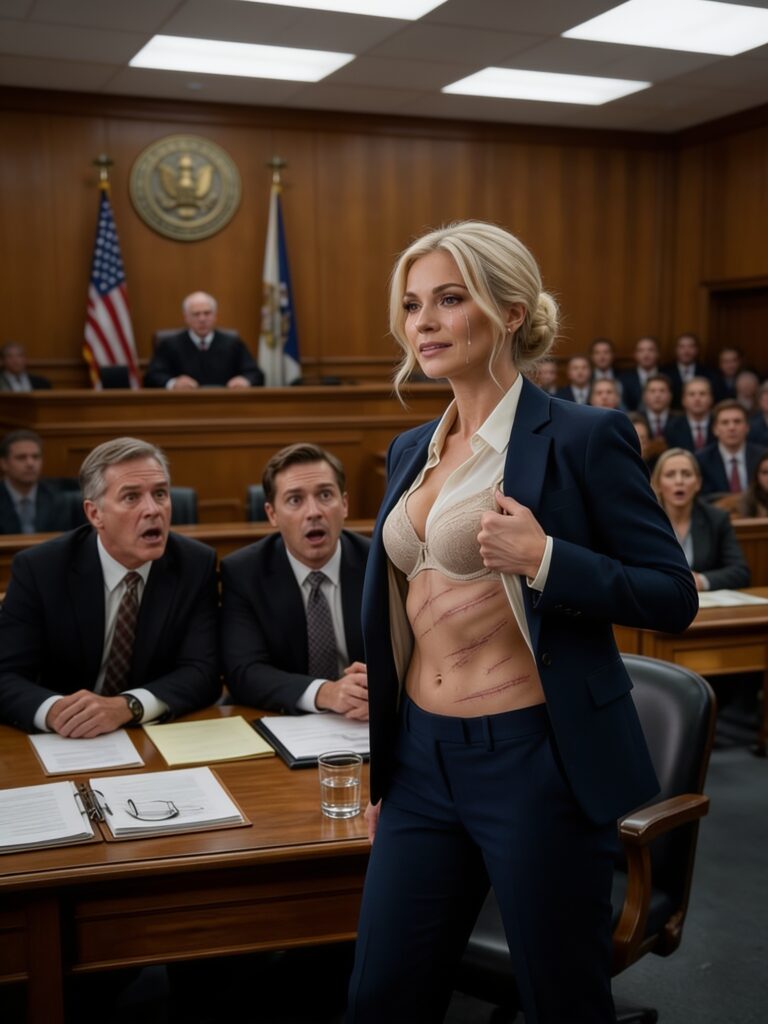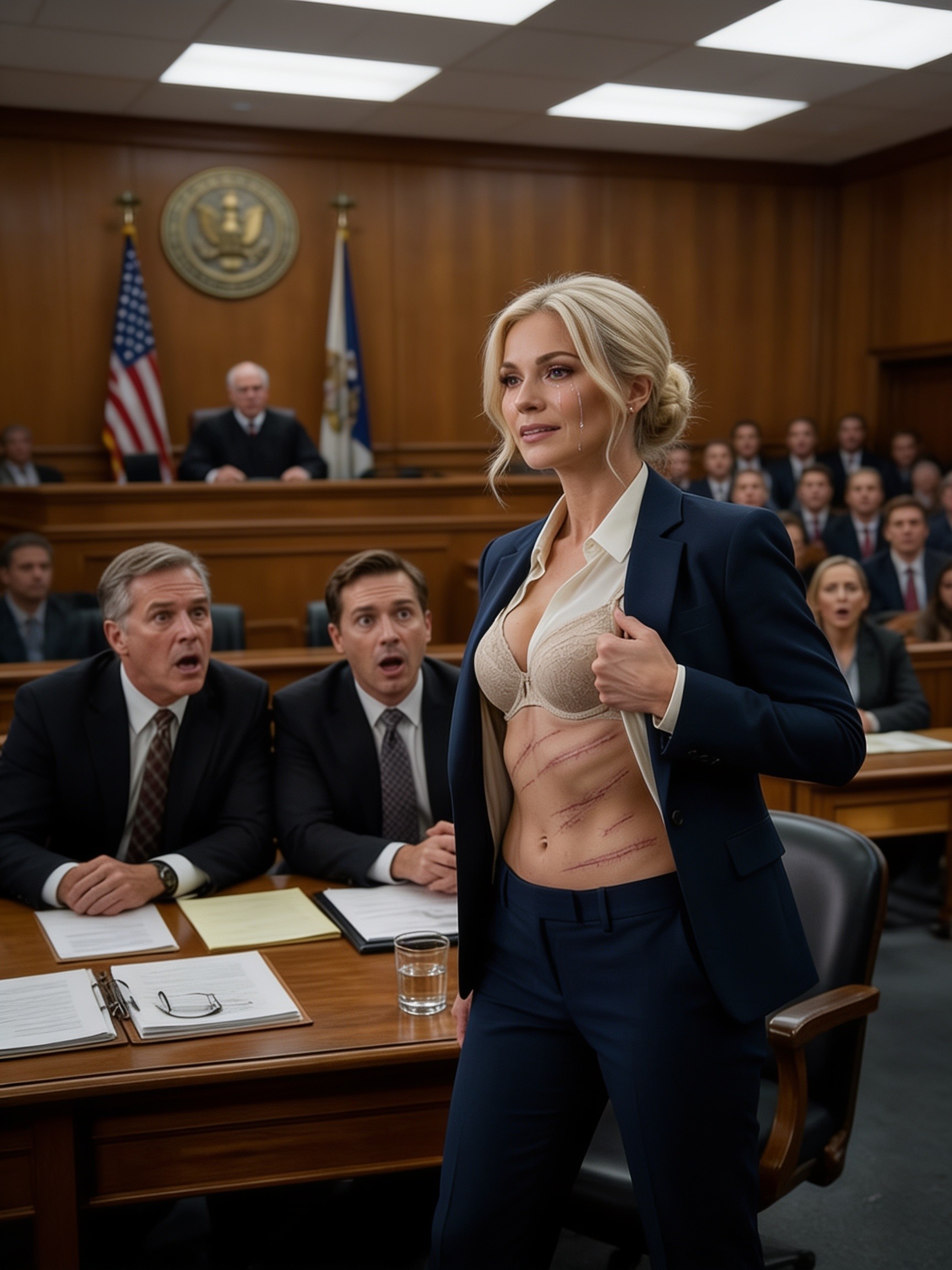
The courtroom fell silent the moment Richard Calloway started laughing.
Not the nervous laugh of a man trying to hold himself together. Not the uncomfortable laugh of someone who knows he has gone too far. This was the laugh of a man who had already decided how the day would end and was simply enjoying the distance between where he sat and where he believed I stood.
For nineteen years Richard had built something carefully. A reputation. A story. A version of himself that the city of Charleston, South Carolina had accepted without question. Successful entrepreneur. Community figure. Self-made restaurant owner who had started with nothing and built something from the ground up.
That last part was technically true.
He had just never mentioned whose hands did most of the building.
Now he sat in an expensive charcoal suit with his attorney beside him and his twenty nine year old girlfriend Natalie in the gallery behind him looking mildly entertained and he was preparing to erase me from his story the way you erase a name from a document. Cleanly. Finally. Without ceremony.
“Your Honor,” Richard said, leaning forward with a smile that had charmed suppliers and food critics and city councilmen for two decades, “I think we can dispense with the drama here. My wife’s contribution to Calloway’s was minimal at best. She answered phones occasionally. She stocked shelves. She was essentially a delivery person with a ring on her finger.”
His attorney smiled at his notepad.
Natalie crossed her legs.
The insult settled over the room like something dropped from a height.
I didn’t move.
I didn’t react.
I sat at the plaintiff’s table and let the words land and I thought about the morning nineteen years ago when I had driven the first supply order to the restaurant at four forty five in the morning because Richard had overslept and the delivery window was closing. I thought about the industrial burns on my right arm from the fryer accident in the third year when we were too small to have proper safety equipment and too proud to admit it. I thought about the Christmas I had spent alone in the kitchen of Calloway’s preparing two hundred holiday meals because Richard had taken Natalie — though I didn’t know her name then — to Savannah for the weekend.
I thought about all of it without showing any of it.
The judge looked at me over her reading glasses.
“Mrs. Calloway. Would you like to respond to that characterization?”
Richard leaned back in his chair. Comfortable. Certain.
“Go ahead Margaret,” he said. The use of my first name in a courtroom was deliberate. A small dominance. A reminder of the nineteen years he had spent deciding what I was worth. “Tell the judge about all your great contributions.”
I stood.
Slowly.
My attorney Patricia stayed seated but I felt her watching.
I unbuttoned my jacket without speaking.
Richard’s smile shifted slightly. Not gone. But uncertain for the first time all morning.
I rolled back my right sleeve.
The burn scar ran from just below my elbow to the edge of my shoulder. Uneven. Permanent. The kind of scar that takes years to stop hurting and never entirely stops being visible.
Someone in the gallery drew a sharp breath.
Then I lifted the hem of my blouse slightly on my left side.
The scar there was longer. A pale irregular line running across my ribs where the industrial shelving unit in the storage room had collapsed on me in the seventh year of our marriage during a solo inventory restock at eleven o’clock at night.
Natalie had stopped looking entertained.
Richard’s attorney sat forward in his chair.
The judge’s expression had changed entirely.
“You told the emergency room I fell at home,” I said. My voice was steady. I had practiced being steady for a long time. “You told the insurance company I was not an employee of Calloway’s and therefore not covered under the business liability policy. You told our families I was clumsy.”
Richard’s jaw worked.
“Margaret that has absolutely nothing to do with the terms of this divorce—”
“It has everything to do with them,” I said.
Patricia rose from her chair beside me.
She placed a thick green folder on the table in front of the judge.
The sound it made when it landed was the only sound in the room.
Inside were nineteen years of things Richard had been certain no one would ever find the patience or the resources to assemble. Medical records from three different hospitals across two states. Payroll documentation showing my name absent from official records despite daily presence at the restaurant for nearly two decades. Insurance filings. Tax returns. Supplier invoices signed in my handwriting under Richard’s name. Statements from six former employees who had watched me run the kitchen, manage the books, train the staff, and hold the operation together during every crisis Richard had been too distracted or too absent to handle himself.
And at the bottom of the folder. A single document that Richard had signed nineteen years ago and apparently forgotten.
A partnership agreement.
Drafted in the first year of the restaurant.
Never filed.
Never activated.
But signed by both of us in ink that had not faded at all.
Richard stared at the folder.
His attorney stared at the folder.
Natalie in the gallery behind them had gone very still.
And I watched something move across Richard Calloway’s face that I had genuinely never seen there in nineteen years of marriage.
Not embarrassment. Not anger. Not the particular contempt he wore when he thought I was being naive about business.
Fear.
Real and unguarded and finally visible.
Because he understood now that this was no longer simply a divorce proceeding about asset division and alimony.
This was an investigation.
And the story he had been telling about himself for nineteen years was about to be examined by people who had not already decided to believe it.
PART 2
The recess lasted forty minutes.
Richard’s attorney requested it almost immediately after Patricia placed the folder on the judge’s desk. The judge granted it without comment but her expression as she left the bench was the expression of someone who had just understood that the case in front of her was considerably more significant than the paperwork had suggested.
During the recess I sat in a small conference room with Patricia and drank water and did not speak for the first ten minutes. Patricia did not push me. She had been my attorney for fourteen months and she understood by now that I processed things in silence before I processed them out loud.
“How are you doing?” she finally asked.
“I’m fine,” I said.
She looked at me.
“I will be fine,” I amended.
She nodded. That was enough for her.
Richard’s attorney made the first move eleven minutes into the recess. He appeared at the conference room door looking considerably less comfortable than he had an hour earlier and asked if we would be open to a conversation about settlement.
Patricia looked at me.
I looked at him.
“No,” I said.
He blinked. “Mrs. Calloway the situation has become—”
“I spent nineteen years accepting what Richard decided things were worth,” I said. “I am not interested in a private conversation about what he thinks this is worth now that he is frightened.” I looked at him evenly. “We will return to the courtroom and we will continue.”
He left.
Patricia allowed herself a small smile.
When court resumed the judge had clearly spent her recess reviewing the contents of the green folder because her questions were precise and pointed in a way they had not been before. She asked Richard’s attorney about the insurance filings. She asked about the payroll records. She asked about the partnership agreement and why it had never been filed despite bearing both signatures.
Richard’s attorney had answers for some of it.
Not all of it.
For the parts he couldn’t answer Richard attempted to speak for himself. He leaned forward and used the voice he used with suppliers when he needed them to accept terms they hadn’t agreed to yet. Reasonable. Authoritative. Certain of its own credibility.
“Your Honor, the partnership agreement was a preliminary document. It was never intended to be a binding—”
“It bears your signature Mr. Calloway,” the judge said.
“Yes but the context—”
“And your wife’s signature.”
“She signed whatever I put in front of her. She trusted me.”
The courtroom absorbed that sentence.
Richard heard it a half second after everyone else did. He heard what it actually sounded like outside his own head. His attorney closed his eyes briefly.
Natalie in the gallery shifted in her seat.
Patricia stood.
“Your Honor, we have six witness statements from former Calloway’s employees prepared to testify that Mrs. Calloway was present at the restaurant an average of sixty hours per week for the duration of the marriage. We have supplier records showing her signature on procurement orders worth a combined total of over four million dollars across the life of the business. We have the original business plan for Calloway’s written in her handwriting.” She paused. “And we have a recorded conversation from eight months ago in which Mr. Calloway tells a colleague — and I quote — that his wife runs the back of house and always has and without her the kitchen would fall apart in a week.”
Richard turned to look at his attorney.
His attorney was looking at his notepad.
The recorded conversation had been the thing Richard never anticipated. He had made it in the parking lot of a supplier’s warehouse. He had been on the phone with his business partner Davis. He had been complaining about how difficult the divorce was becoming and he had said — in the casual way people speak when they believe no one who matters is listening — that Margaret knew where everything was and how everything worked and that the hardest part of all of this was going to be replacing what she actually did.
Davis had not mentioned the conversation to Richard.
Davis had mentioned it to Patricia.
Because Davis had known me for sixteen years and had watched what I did for that restaurant and had decided — quietly, without fanfare, in the way that decent people sometimes make decisions — that the truth deserved to be somewhere it could be used.
PART 3 — FINAL
The judge’s ruling came on a Thursday morning three weeks after the trial.
I was sitting at my kitchen table with coffee when Patricia called. She read the key points in her professional voice and I listened without interrupting. When she finished there was a pause.
“Margaret,” she said. “Are you there?”
“Yes,” I said. “Read it again please.”
She did.
Forty nine percent of Calloway’s Restaurant Group. Valued at the time of the ruling at two point three million dollars. Awarded to Margaret Anne Calloway on the basis of undocumented labor contribution, falsified employment records, and the valid partnership agreement bearing both signatures dated nineteen years prior.
Additionally. Back compensation for nineteen years of unrecorded work calculated at a reasonable market rate for the positions held. The figure was significant. Significant enough that Richard’s attorney had tried three times during the final session to negotiate it downward and Patricia had declined three times with increasing brevity.
Medical costs related to both workplace injuries. Past and ongoing. Covered in full by the business liability policy that should have covered them nineteen years ago.
And the house on Magnolia Street that Richard had purchased in his name alone six years into our marriage with money from the restaurant’s first profitable year. The house I had chosen. The house I had furnished and maintained and loved in the way you love something you have made into a home through daily effort over many years.
Mine.
Richard received fifty one percent of the restaurant operation. His name on the door. His face in the press releases. His story to continue telling.
He also received the debt load that came with the business. The supplier contracts due for renegotiation. The staffing issues that had been quietly building for two years because I had been the person managing them and I had stopped managing them the day I filed for divorce.
He received all of that without the person who had known how to handle it.
I heard through Patricia that Natalie lasted four months after the ruling. I don’t know if that is entirely accurate and I find I don’t particularly need it to be.
Davis called me the week after the ruling. He said he was sorry it had taken him so long to say something. I told him I understood. I meant it. People do what they can when they can and sometimes the timing is imperfect and the truth arrives later than it should have and that has to be enough.
It was enough.
I spent the first month after the ruling doing very little. I sat on the porch of the Magnolia Street house. I cooked things I had never had time to cook. I slept past six in the morning for the first time in nineteen years. I let myself be completely unproductive and I tried not to feel guilty about it which was harder than it sounds.
Then I started writing.
Not a business plan. Not a proposal. Just notes at first. Things I knew. Things I had learned in nineteen years of running a kitchen and managing suppliers and training staff and solving problems that never made it onto any official record.
By the third month the notes had become something more organized.
By the fifth month I had a meeting with a small business lender who had heard about the case — it had received some attention in the local press — and wanted to talk.
The meeting lasted two hours.
I walked out with a commitment for seed funding.
Calloway’s had its name on the door.
What I was building would have mine.
On the day I signed the lease on the commercial kitchen space I called my mother. She had watched the trial from the gallery every day. She had sat in the third row on the left and she had not reacted visibly to anything — not to the scars, not to the folder, not to Richard’s recorded voice describing what I actually did for his restaurant — because she had raised me to hold myself together in public and she was going to lead by example even at seventy one.
When I told her about the lease she was quiet for a moment.
Then she said, “What are you going to call it?”
I looked around the empty kitchen space. Concrete floors. Industrial lighting. The particular smell of a room that has not yet become anything but could become anything.
“Margaret’s,” I said.
She laughed. A real laugh. The kind she usually kept for private moments.
“It’s about time,” she said.
Twenty years of someone else’s name on the door.
One Thursday morning ruling.
And a kitchen that finally had mine.
Share this for every woman who built something in silence and was told she had carried boxes. You built more than boxes. You built everything. ❤️👇
— Update: Margaret’s opened on a Saturday morning in April. There was a line out the door before we unlocked it. Davis was first in line. He brought flowers. I put them on the counter where everyone could see them. Richard drove past twice. He didn’t stop. That was enough.