
Read Full Story
The ceiling above me was white and the lights were the particular brightness of rooms designed for seeing things clearly, and for several seconds I did not know where I was, only that I was horizontal and still and that nothing was happening to me in this moment.
That last part was the one that mattered.
A nurse was at the monitor beside the bed, and when she saw my eyes open she said my name and asked if I could hear her.
I said yes.
She said I was at Parkland Memorial.
She said I had been brought in unconscious.
She said my husband was in the waiting area.
I closed my eyes.
My name is Sarah Carter and I had two daughters — Maya, who was eight, and Lily, who was six — and they were at home with Richard’s mother while I was in this hospital bed, and the thought of them was the first clear thought I had when the ceiling came into focus.
They needed me to come back.
That was the thought.
Not: I am in pain, which I was.
Not: I am afraid of what happens when I leave this room, which I was.
They needed me to come back.
The doctor’s name was Dr. Elias Osei and he came into my room about forty minutes after I had been brought up from imaging. He was in his fifties with the specific manner of someone who has been doing this work long enough to have developed the patience that experience produces and the directness that comes from understanding that time matters.
Richard was already in the room when Dr. Osei arrived.
He was performing the version of himself that he presented to people he needed to believe him — concerned, slightly overwhelmed, the devoted husband managing a frightening situation.
He had told the admitting nurse I fell down the stairs.
He had repeated it to the triage physician.
He would have repeated it to anyone who asked because it was a sentence he had prepared and the preparation made it sound like a fact.
Dr. Osei looked at Richard for a moment.
Then he said: Mr. Carter, I’d like to review something with you in the hallway.
Richard went.
The door was not fully closed.
I lay in the bed and listened.
I heard Dr. Osei’s voice, low and serious.
I heard the silence from my husband that followed.
The specific silence of a man who has been shown something he cannot explain with the story he brought to the hospital.
Several minutes passed.
Richard came back through the door.
He was holding the X-ray film.
His face was the color of old chalk.
His mouth opened and closed.
Not because he had nothing to say. Because the thing he wanted to say required a story he did not have.
Dr. Osei came in behind him.
He looked at Richard.
He said: Mr. Carter, please step to the other side of the room.
Richard moved.
Dr. Osei pulled the chair from the corner and placed it beside my bed and sat in it, close, at eye level.
He said: Mrs. Carter, I need to ask you something. And I need your husband to remain completely silent while you answer.
Richard opened his mouth.
Dr. Osei raised one hand.
He said: I said silent.
For the first time in ten years I watched someone interrupt my husband without consequence to themselves.
Richard froze.
Dr. Osei looked at me and only at me.
He said: Mrs. Carter. Did you really fall down the stairs?
Richard’s eyes were on the side of my face.
I did not look at him. I knew what his eyes contained when they had that quality — I had learned that look across ten years the way you learn something that you need to know for survival. It was the look that preceded the locked bedroom door. The look that promised that whatever happened in this room would be addressed after we left it.
My daughters were at home.
They needed me to come back.
I had told myself that was the reason to stay quiet for ten years.
Stay quiet, come home, come back to them.
I understood something in the silence of that hospital room that I had been working toward understanding for a long time.
If I stayed quiet, I would come back.
I would come back and the door would lock and my daughters would grow up watching their mother stay quiet.
They would learn that staying quiet was what you did.
They would learn it from me.
I looked at Dr. Osei.
He was waiting.
Not with urgency. With the patience of someone who has asked this question before and understands that the answer requires something from the person giving it and that the something cannot be rushed.
I said: no.
The word came out small.
It was the largest thing I had ever said.
Dr. Osei nodded once.
He said: can you tell me what happened?
I said: he did this. Richard did this.
From the other side of the room there was movement and Dr. Osei turned his head and said Mr. Carter, do not move, and something in his voice produced stillness.
I said: it has been a long time. Years.
Dr. Osei said: I know. The X-ray showed us things that don’t happen from one fall.
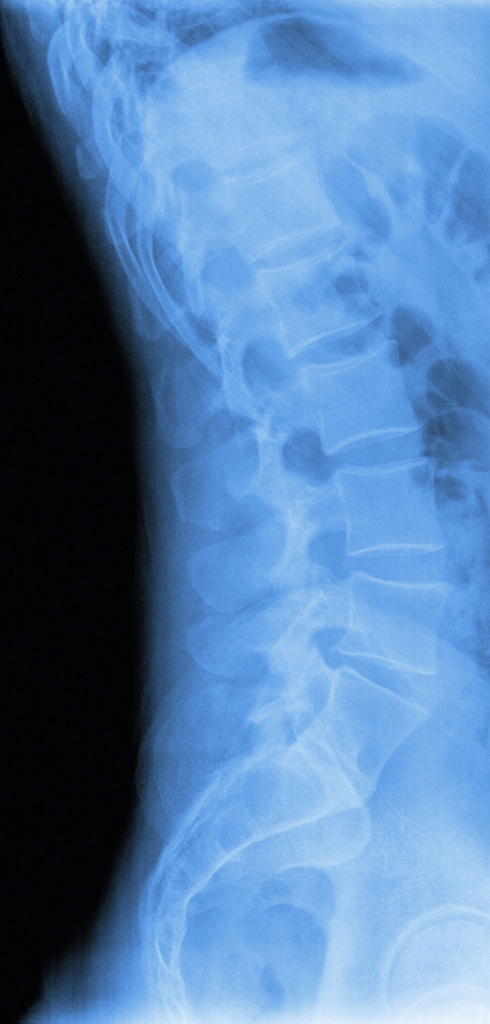
He said it without drama. As a fact. As the thing the imaging had shown and that he was naming so I would understand he had already seen it and was not asking me to prove it.
Old fractures.
The body keeps its records.
Mine had been keeping them for years.
He said: I’m going to ask a colleague to come in. Her name is Dr. Torres and she works with patients in situations like yours. Is that all right?
I said: yes.
He stood.
He said: you did the right thing.
He looked at Richard.
He said: Mr. Carter, there are two officers in the hallway. They have been there since we reviewed the imaging. I need you to go speak with them now.
Richard said: she’s lying. She’s confused, the medication—
Dr. Osei said: Mr. Carter.
Richard stopped.
Dr. Osei walked to the door and opened it and two officers came in and Richard’s performance collapsed in the specific way performances collapse when the audience has already seen behind them.
She came in twenty minutes later.
She had short hair and reading glasses on a chain around her neck and she moved through the room with the practiced ease of someone who had been in many rooms like this one.
She pulled the chair close the way Dr. Osei had and she said: I’m Dr. Torres. I work with the hospital’s domestic violence response team. Is it all right if we talk?
I said: yes.
She said: you don’t have to tell me everything today. You don’t have to have the full story organized. I just want you to know what is available to you right now.
I said: my daughters are at home.
She said: I know. We’re working on that. A social worker is coordinating with a family advocate right now to make sure they are safe and that you know where they are.
I said: his mother is with them. She won’t—
She said: I understand. The advocate will assess the situation and make sure Maya and Lily are somewhere they can stay safely while you are here.
She said their names.
I had not told her their names.
She saw my expression.
She said: the nurses told me. I hope that’s all right.
I said: yes.
She said: Sarah, I want to tell you something that I tell every patient in your situation and that I mean every time I say it. What happened to you is not your fault. Not any part of it.
I said: I know.
She said: knowing it and feeling it are different things. You may know it for a long time before you feel it. That’s okay.
I said: what happens now?
She said: the officers will take your statement when you’re ready. There’s no rush today — you can give it tomorrow or the day after. The hospital’s social work team will connect you with a shelter that can house you and your daughters when you’re discharged. There are legal resources available. An advocate will walk with you through every step.
She said: Richard has been removed from the building.
That sentence.
I breathed.
Dr. Torres said: is there someone I can call for you? Family, a friend?
I thought about my sister.
I had not spoken to her in three years because Richard had said she was a bad influence.
I said: my sister. Her name is Carol.
Dr. Torres said: tell me her number.
Carol arrived at eight that evening.
She came through the door and she looked at me in the bed and she said my name in the voice she used when we were children and one of us was hurt, and I held out my hand and she took it and sat on the edge of the chair Dr. Torres had left beside the bed.
She said: I’ve been waiting for you to call for three years.
I said: I know.
She said: I should have pushed harder.
I said: I wasn’t ready to hear it.
She said: are you ready now?
I said: I said no today. To a doctor. Out loud.
She said: I know. Dr. Torres called me before she gave you the phone.
I said: is that all right?
She said: that is the most all right thing anyone has ever done.
Maya and Lily were at the shelter when I was discharged four days later.
The advocate, a woman named Patricia, had arranged it. She had assessed the situation at Richard’s mother’s house and had determined that the children needed to be moved, and Richard’s mother had complied with a weariness that told me she had been waiting for something like this for longer than I had understood.
When I walked into the shelter room and my daughters saw me, they ran.
Not cautiously.
Not with the careful approach of children who have learned to check before reaching for comfort.
They ran.
Lily hit me at full speed and I held her and Maya came in behind her and I held both of them and I stood in the shelter room and held my daughters who had spent years watching their mother curled into a ball, and I thought: this is different.
This is the beginning of different.
The legal process took eleven months.
I will not detail all of it because it belongs to the record and to the attorneys and to the advocates who walked with me through it, and because the details are less important than what they produced.
What they produced was safety. First as a fact, then as a feeling, the way Dr. Torres had said it would come — knowing before feeling, and feeling arriving eventually.
Richard was charged.
The X-rays were evidence.
Dr. Osei testified.
I testified.
I said what I said in the hospital room and I said more, with the specific clarity of a woman who has stopped being quiet and has discovered that the voice she had been withholding works exactly as designed.
The charges were sustained.
The protective order was permanent.
Eleven months after the hospital I sat in a small apartment that Carol had helped me find — two bedrooms, a kitchen with a window, a yard that was not large but was mine — and I watched Maya and Lily do homework at the kitchen table.
Lily was humming something.
Maya was arguing with her pencil about a math problem.
The specific ordinary noise of two children doing their homework.
I had not heard that noise without the underneath noise of fear for so long that I had forgotten it could exist without it.
It existed without it.
I made dinner.
We ate at the table.
Maya said: Mom, can we get a plant?
I said: yes.
Lily said: can it be purple?
I said: find me a purple plant.
She said: there are purple succulents.
I said: then we’ll get a purple succulent.
She wrote it on her hand with a marker so she would not forget.
I watched her do it and I thought about Dr. Osei pulling a chair to my bedside and asking me to answer one question.
I thought about the question.
I thought about the word I had said.
No.
One word.
The largest thing I had ever said.
And everything that had come from it.
The officers in the hallway.
Carol at the bedside.
Patricia with Maya and Lily.
The legal process.
The apartment.
The purple succulent.
Dr. Torres had said: knowing it and feeling it are different things.
I felt it now.
Not completely. Not all the time. But in the kitchen on a Tuesday evening with homework and humming and a marker on a hand — in the ordinary texture of a life that was safe — I felt it.
I was not in pain.
Nothing was happening to me in this moment.
That was the first thought I had had in the hospital room.
It was still the most important thought.
Nothing is happening to me in this moment.
And in the next moment.
And the next.
If you are in a situation like mine, please reach out.
The National Domestic Violence Hotline is available 24 hours a day, 7 days a week.
Call 1-800-799-7233 or text START to 88788.
If you are in immediate danger, call 911.
You do not have to have the full story organized.
You just have to say the word.
One word.
It works exactly as designed.
